HBU Meaning: Understanding “hbu” and Polite Alternatives for Every Conversation
You see it in almost every text thread. Someone shares their update and ends with three letters: hbu. Simple. Fast. Very American.
HBU is one of those tiny abbreviations that carries more weight than it looks. It keeps conversations alive, signals social warmth, and — in the right context — can even be flirty. But use it in the wrong place? It can come across as cold or lazy.
This guide breaks down everything about HBU meaning — its origins, emotional signals, flirty side, and the best polite alternatives for every conversation.
| Quick Answer HBU stands for “How About You?” — a casual texting abbreviation used across the US to keep conversations going. Most common in: text messages, DMs, Snapchat, Instagram Tone: warm, flirty, neutral, or cold — depends on context Avoid in: professional emails and formal settings Similar terms: WBU (What About You?), WYD (What You Doing?) |
What Does HBU Mean in Texting and Everyday Conversations?
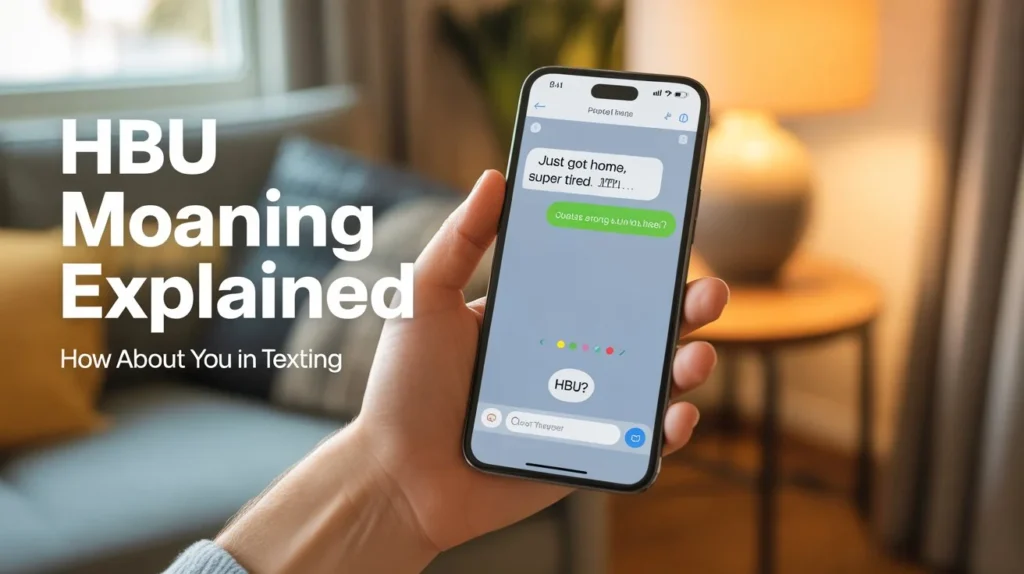
The Literal Meaning of HBU — How About You?
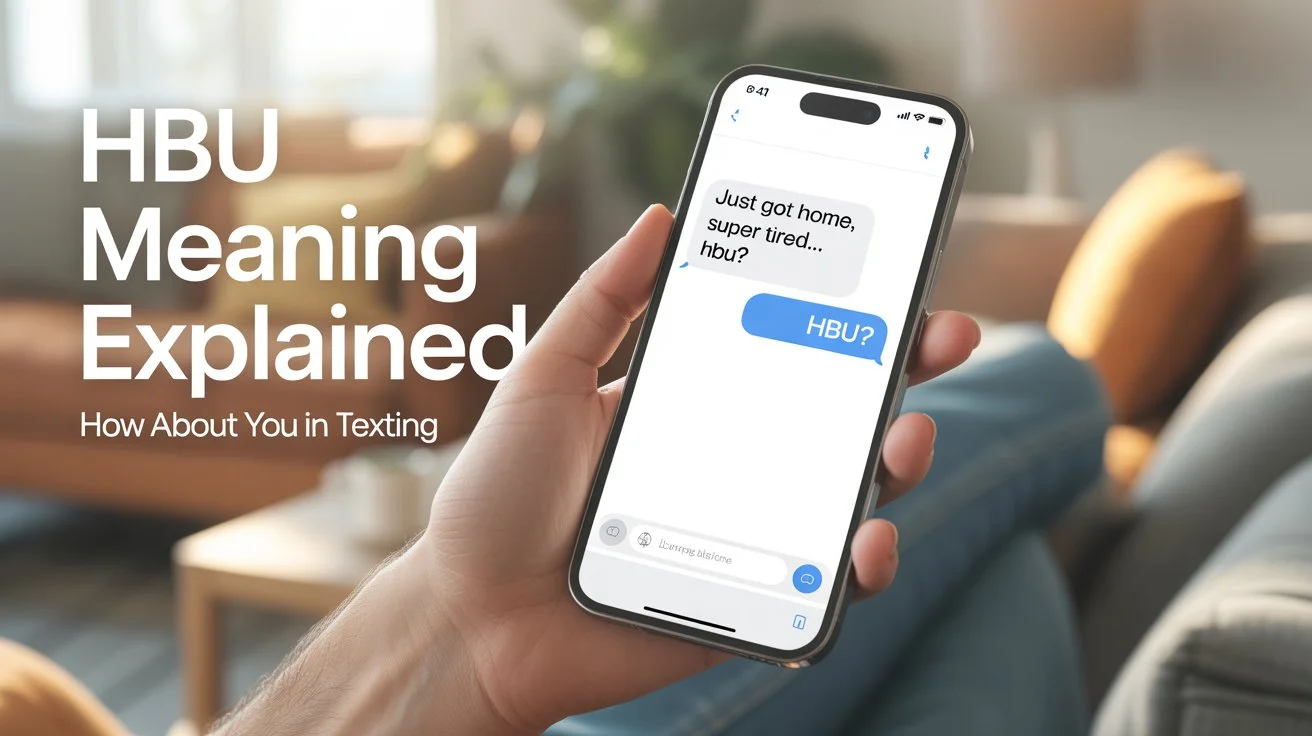
HBU stands for How About You? It is a follow-up question. You share something — your mood, your plans, your update — and then toss the ball back to the other person.
Example: Just finished work, super tired. Hbu? — simple, clean, keeps the chat moving.
You will see it written as HBU, hbu, or Hbu. Capitalization does not change the meaning. Lowercase just feels more relaxed and human.
Where Did HBU Come From? Origins and History
HBU was born out of SMS culture in the late 1990s and early 2000s. Back then, text messages had a 160-character limit. Every letter counted. People got creative — and abbreviations exploded.
Early instant messaging platforms like AIM (AOL Instant Messenger) and MSN Messenger made shorthand feel completely natural. LOL, BRB, IDK, WYD — and HBU — all grew from that same texting revolution.
Smartphones removed character limits. But the habit stayed. Today, HBU is used not to save space — but because it signals casual comfort and social ease.
HBU vs WBU — What Is the Real Difference?
Many people ask: is it WBU or HBU? Both are correct. Both mean roughly the same thing.
HBU = How About You? — slightly warmer, more commonly used in the US
WBU = What About You? — a bit more neutral, equally understood
The difference is tiny. Think of it as choosing between how are you and what about you — same intent, slightly different feel. Use whichever comes naturally.
How HBU Looks in Real Texting Examples
Seeing it in action makes it much clearer:
- Casual check-in: Just got back from the gym. Hbu?
- Light conversation starter: Loving this weather today, hbu?
- Emotional share: I had a rough day honestly… hbu?
- Flirty opener: Not doing much tonight, hbu?
Notice how context shapes meaning entirely. Same three letters — completely different feelings.
Must Visit: OOTD Meaning Explained: A Complete Guide for Beginners
How and When Americans Use HBU in Digital Communication
HBU in Casual Texting, DMs, and Group Chats
In everyday American texting culture, HBU is everywhere. You will find it in one-on-one text messages, Instagram and Snapchat DMs, group chats, and casual Twitter/X replies.
It works because it is fast, friendly, and signals you actually care about the other person — not just sharing your own update and disappearing.
Is HBU Flirty? What It Signals in Romantic Conversations
Here is what most articles miss: yes, HBU can absolutely be flirty.
When someone you are attracted to sends hey, just got home — hbu? late at night, that is not just small talk. That is an invitation to connect. They want to know about your world.
The flirty layer comes from tone, context, and timing. If it is late, from someone who usually texts you first, and paired with a personal share — that signals real interest.
However, if it appears mechanically after every single message, it can read as conversational autopilot — no flirty intent whatsoever. Context decides everything.
What Does It Mean When a Girl Says HBU?
This is one of the most searched questions around this topic — and it deserves a real answer.
When a girl texts HBU after sharing something personal, she is sending a clear social signal: she wants the conversation to continue. She is curious about you and not just dumping info and leaving.
If she adds a heart emoji or a flirty tone alongside it — pay close attention. That shifts the energy of the entire message from casual to intentionally warm.
On the other hand, if it comes after a one-line reply with no follow-up, it may just be conversational habit — a polite social reflex. Read the whole conversation, not just the three letters.
When HBU Feels Warm vs When It Feels Cold
It feels warm when: the conversation has real energy, there is genuine back-and-forth, and the person waits for your reply.
It feels cold when: it follows a one-word reply with no follow-up, and the person ghosts right after you answer.
Communication researchers note that reciprocity in conversation — showing equal interest — is key to social bonding. HBU is a tool for that reciprocity. But it only works when backed by real follow-through.
HBU Meaning Across Different Social Contexts
HBU in Professional Settings — Is It Appropriate?
Short answer: no. HBU does not belong in professional communication.
In US workplaces, digital communication etiquette still leans formal — even on Slack or Teams. Sending your manager just submitted the report, hbu? lands very awkwardly.
It is not about being uptight. It is about reading the room. Professional relationships carry a level of formality that abbreviations like HBU undercut. Use full phrases like How are things on your end? in work settings instead.
HBU Among Friends vs Strangers
With close friends, HBU is second nature. No one overthinks it. You reply, they reply, the conversation flows.
With strangers or new acquaintances? Be careful. HBU can feel abrupt or lazy to someone who does not know you well. A fuller phrase like How has your day been going? comes across as far more thoughtful and intentional.
How Gen Z and Millennials Use HBU Differently
Millennials (born 1981-1996) tend to use HBU more literally — asking for a genuine update, expecting a real reply.
Gen Z (born 1997-2012) often use HBU more casually — sometimes as social filler, frequently followed by a meme, GIF, or voice note rather than a typed reply.
For Gen Z, the tone of the follow-up matters more than the abbreviation itself. A HBU followed by a 30-second voice note feels more intimate than a typed paragraph. That is how modern digital communication has evolved.
HBU on Social Media Platforms
- Snapchat: Very natural. HBU fits the quick, disappearing-chat vibe perfectly.
- Instagram DMs: Common in casual convos, often paired with a story reaction.
- Twitter/X: Less common, but used in casual replies to polls or opinion tweets.
- iMessage/SMS: The home base of HBU — where it originated and thrives most.
- LinkedIn: Never. Seriously — never use HBU on LinkedIn.
Polite Alternatives to HBU for Every Situation
Friendly Alternatives for Casual Conversations
Sometimes you want that same casual warmth but sound a little more intentional:
- How about you? — the full unabbreviated version. Still light and friendly.
- What about you? — slightly more neutral, equally natural.
- And you? — super short, feels warm and conversational.
- What is going on with you? — a step up in personal interest.
Professional and Formal Alternatives
In work, business, or formal settings, swap HBU for these:
- How are things on your end? — polished and professional.
- I would love to hear how you are doing. — warm but composed.
- How has your experience been? — formal and respectful.
- What is your take on things? — invites opinion without being too casual.
Alternatives That Sound More Warm and Personal
If you want to show genuine care — especially in emotional conversations — go deeper:
- How are you really doing? — signals you want a real answer, not just small talk.
- Tell me about your day. — confident, warm, and inviting.
- I have been thinking about you — how are you holding up? — emotionally intelligent and personal.
Quick Comparison Table — HBU vs All Alternatives
| Slang | Full Form | Tone | Best Used When |
| HBU | How About You? | Casual / Friendly | After sharing your own update |
| WBU | What About You? | Neutral / Curious | Any informal exchange |
| WYD | What You Doing? | Casual / Checking in | Starting a new conversation |
| SUP | What’s Up? | Very relaxed | Opening a chat |
| IDK | I Don’t Know | Uncertain | Replying with honesty |
Related Slang You Should Know Alongside HBU
What Does WYD Mean in Texting?
WYD stands for What You Doing? It is a casual check-in used to start a conversation or see if someone is free.
While HBU is a follow-up question used after you have shared something, WYD is more of an opening line. It starts the conversation; HBU keeps it going.
Example: WYD later? Was thinking we could hang. — versus — Just got home, hbu?
What Does Boo Mean in a Text?
Boo is an American term of endearment — used for a romantic partner, close friend, or someone you care about deeply. It signals affection, closeness, and warmth.
When you see boo with a heart emoji in a text, it means the person considers you emotionally close. It is warm, soft, and intimate.
In HBU conversations, someone might say: Had the best day, boo — hbu? That is a layered, emotionally rich message packed into just a few words.
Other Common Texting Abbreviations Used With HBU
- LOL (Laughing Out Loud) — lightens the mood
- IDK (I Don’t Know) — casual uncertainty
- BRB (Be Right Back) — stepping away briefly
- NGL (Not Gonna Lie) — honest, raw sharing
- IKR (I Know Right?) — agreement and relatability
- TBH (To Be Honest) — signals sincerity
How These Slang Terms Work Together in One Conversation
Real conversations mix all of these naturally. Here is what a real texting exchange might look like:
Friend 1: NGL today was rough lol. Work was chaos. HBU?
Friend 2: IKR same! BRB grabbing food but tbh it was sweet of you to ask.
Notice how HBU sits naturally among other abbreviations? It does not stand alone — it flows with the whole digital language Americans use every day.
FAQs — HBU Meaning and Usage Answered
| Question | Answer |
| What does HBU mean in texting? | HBU means How About You? It is a quick way to ask someone about themselves after sharing your own update. Very common in US texting culture. |
| Is HBU flirty? | It can be. When used in a flirty context — especially from someone you are interested in — HBU signals curiosity and interest. Tone, timing, and context decide everything. |
| Is it WBU or HBU? | Both are used. HBU means How About You and WBU means What About You. They are nearly identical. HBU is slightly more common in US texting. |
| What does it mean when a girl says HBU? | It means she wants the conversation to continue and is curious about you. It is a social cue showing interest and engagement. |
| What does boo mean? | Boo is an affectionate nickname for a romantic partner or close friend. Combined with a heart emoji it signals love, closeness, and warmth. |
| What does WYD mean in texting? | WYD stands for What You Doing — a casual check-in used to start a conversation or see if someone is free to hang out or chat. |
Final Thoughts
HBU is small but mighty. Three letters that signal friendliness, curiosity, and conversational balance — when used right.
Know your context. Use it freely with friends. Swap it for something fuller in professional or emotional conversations. And remember — whether it is hbu, wbu, wyd, or boo — real connection is always about more than the abbreviation. It is about showing up for the other person.