Boba Definition: What It Really Means, Where It Comes From, and Why Everyone Loves It
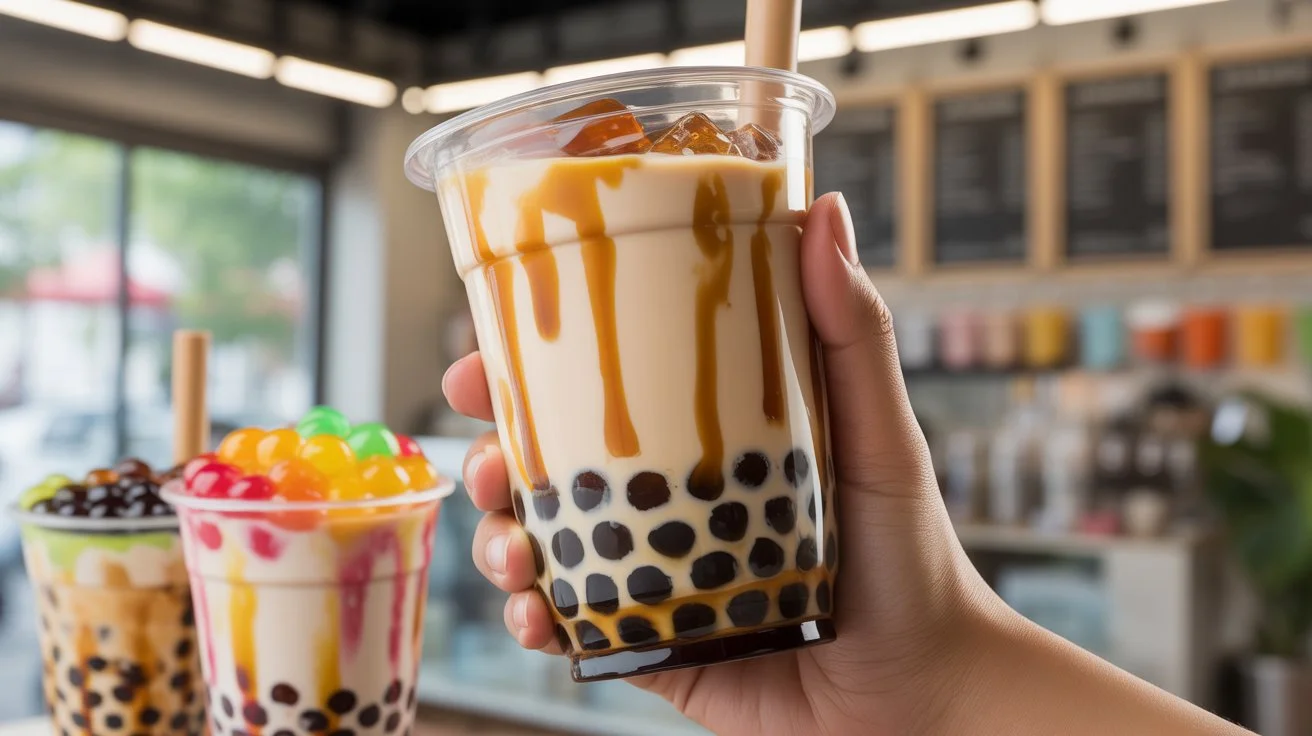
You see it everywhere — in strip malls, college towns, and TikTok videos. But what is boba, really? Most people know it as that sweet drink with chewy balls at the bottom. But the full boba definition goes much deeper than that.
From its Taiwanese roots to its current spot as a multi-billion dollar global beverage, boba is more than a drink. It is a cultural phenomenon that redefined how Americans think about tea, texture, and flavor.
| Quick Answer: Boba Definition Boba is a sweet, cold (or hot) drink made from tea, milk, and chewy tapioca pearls. It is also called bubble tea or pearl milk tea. The word first appeared in English around 2000 (Merriam-Webster). Boba = the drink | Boba = the chewy tapioca balls inside it | Boba = a global cultural movement Origin: Taiwan, late 1980s Made from: Tapioca starch, cassava root, brown sugar, tea, milk Calories: ~272 per 8 oz (Verywell Fit) Also known as: Bubble tea, pearl tea, tapioca tea, boba milk tea |
Boba Definition — What Boba Really Means
The Official Boba Definition (Merriam-Webster and Dictionary.com)
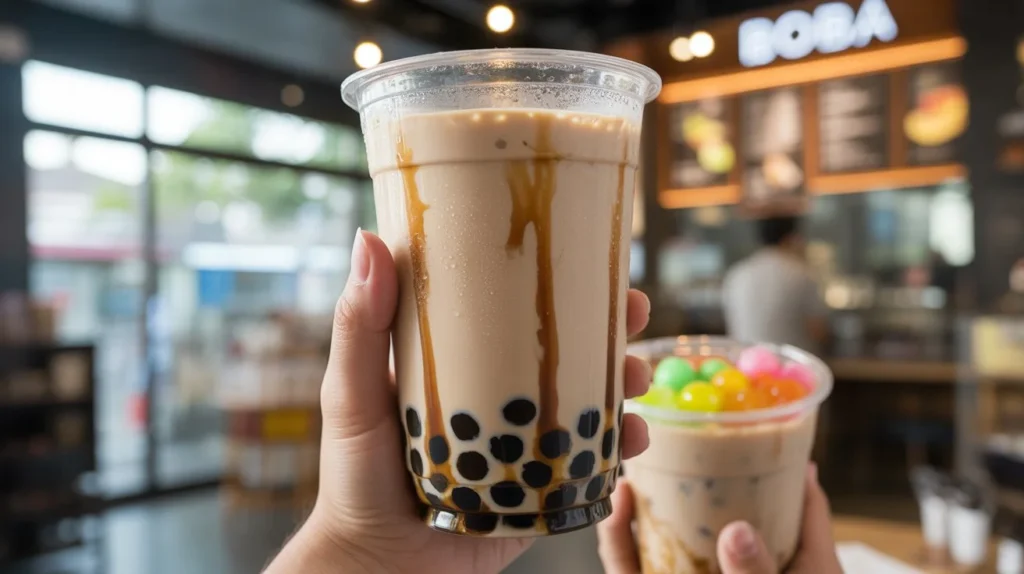
According to Merriam-Webster, boba is defined as: a sweet drink of tea mixed typically with milk, tapioca balls, and additional ingredients, served hot or cold. The first known use of the word in English was recorded in 2000.
Dictionary.com adds that boba also refers specifically to the large, round tapioca pearls themselves — usually boiled in sweetened syrup — that sit at the bottom of the cup. So the word boba covers both the pearls and the full drink.
Cambridge Dictionary defines it similarly: a cold, sweet drink made of tea with tapioca balls added. All three major dictionaries agree on one thing — boba is now a fully recognized English word with a clear, standardized definition.
What Does the Word Boba Actually Mean in Chinese?
This is where it gets fascinating — and where most blogs stop short.
The word boba is borrowed from Chinese (Beijing Mandarin) — specifically the term boba (bōbà). According to Dictionary.com, it colloquially translates to “large-breasted woman” in Chinese slang — with bo meaning ball or breast (borrowed from English “ball”) and ba meaning overlord or tyrant.
Over time, the term became a playful, informal name for the oversized tapioca pearls in the drink. The slang stuck. And when the drink traveled to the US, the name came with it — minus the original double meaning.
Etymology — Where the Word Boba Comes From
Dictionary.com traces the word’s first recorded use to 1995-2000, rooted in Cantonese (bo baa) and Mandarin (boba). Merriam-Webster sets the English debut at 2000.
The term spread through Taiwanese immigrant communities on the US West Coast before going mainstream in the 2010s. Today it is one of the few food and beverage words that crossed from Cantonese slang straight into standard American English — and into every dictionary that matters.
Boba vs Bubble Tea vs Milk Tea vs Pearl Milk Tea
Are boba and bubble tea the same thing? Almost always, yes — but there are subtle differences worth knowing.
| Name | Contains Pearls? | Contains Milk? | Origin Term |
| Boba Tea | Yes | Usually | USA / Taiwan |
| Bubble Tea | Yes | Usually | Taiwan / Global |
| Milk Tea | Not always | Yes | UK / Asia |
| Pearl Milk Tea | Yes | Yes | Taiwan |
In everyday American usage, boba and bubble tea are used interchangeably. The bubbles in bubble tea originally referred to the foam created by shaking the drink — not the pearls. But over time, the two terms merged into the same meaning in the US market.
Must Visit: HBU Meaning: Understanding “hbu” and Polite Alternatives for Every Conversation
What Is Boba Actually Made Of?
The Core Ingredients Inside Every Boba Drink
At its foundation, a boba drink has three core components: brewed tea, milk or a non-dairy alternative, and tapioca pearls. Everything else — syrups, toppings, fruit juices — is a customization layer on top.
The tapioca pearls are made by combining tapioca starch (extracted from the cassava root) with water and brown sugar. This mixture is kneaded into a dough, rolled into balls, and then boiled until they develop that signature chewy, gummy texture boba lovers crave.
Additional toppings like egg pudding, cheese foam, chia seeds, and grass jelly can be added. These are typically available only at dedicated boba shops — not standard cafes.
What Type of Tea Is Used in Boba?
Most traditional boba recipes use black tea or green tea as the base. Both offer a mild, slightly tannic flavor that pairs well with sweetened milk and chewy pearls.
Modern boba tea shops across the US also offer matcha, jasmine tea, taro, oolong, and even fruit tea bases like passion fruit, lychee, and strawberry. Taro — the purple root vegetable — has become one of the most iconic boba flavors in the American market.
Milk Options — From Whole Milk to Oat Milk and Cheese Foam
The milk component is highly customizable. Traditional recipes use whole milk or condensed milk for a creamy richness. But with the rise of plant-based diets, boba shops now offer oat milk, almond milk, coconut milk, and soy milk as standard alternatives.
One increasingly popular topping is cheese foam — a lightly salted, creamy froth made from cream cheese or cream. It sounds unusual. But the sweet-salty contrast on top of a cold milk tea is genuinely addictive and now a staple at premium boba shops nationwide.
What Do Boba Pearls Actually Taste Like and Feel Like?
What does boba taste like? On their own, classic tapioca pearls have a mild sweetness from the brown sugar syrup they are cooked in. They also absorb some of the surrounding tea flavor — so they take on the taste of whatever drink they sit in.
The texture is what truly defines the experience. Boba pearls have a dough-like, gummy consistency — similar to mochi or gummy bears but less firm. Each pearl delivers a subtle chew that slows down the drinking experience and adds a textural dimension no other beverage category offers.
That unique chew factor — along with the wide-straw ritual of slurping pearls up from the bottom — is a big part of why boba became a cultural experience, not just a drink.
Types of Boba — Not All Pearls Are the Same
Classic Tapioca Pearls — The Original
These are the original and most widely recognized form. Made from tapioca starch derived from cassava, they are cooked in brown sugar syrup until they turn dark, glossy, and irresistibly chewy.
Classic pearls must be served fresh. They harden within a few hours if left sitting too long — which is why quality boba shops make fresh batches throughout the day. This freshness factor separates great boba shops from mediocre ones.
Popping Boba — The Fruit-Filled Version
Popping boba are thin-shelled spheres filled with flavored fruit juice. They burst in your mouth the moment you bite down, releasing a quick flood of flavor. They are made using a process called spherification — a culinary technique where liquid is encased in a thin gel shell made from seaweed-derived sodium alginate.
Popular flavors include mango, passion fruit, strawberry, lychee, and green apple. They are a favorite among younger boba drinkers and work especially well in fruit tea bases.
Crystal Boba — The Konjac Alternative
Crystal boba is made from the konjac plant — a root vegetable native to Asia. Unlike classic tapioca pearls, crystal boba contains zero tapioca. It is naturally translucent, has a softer chew, and is significantly lower in calories and carbohydrates.
This makes crystal boba a popular choice for health-conscious consumers and those watching their sugar or carb intake. It comes in flavors like mango, matcha, and lychee — and holds its texture longer than classic pearls, making it easier for shops to prep in advance.
Mini Pearls, Grass Jelly, and Other Popular Toppings
Mini pearls are exactly what they sound like — smaller versions of classic tapioca balls. Their size lets you enjoy the full chewy experience in a single sip without the large straw. They work well in milk teas and fruit slushies.
Grass jelly is a dark, silky jelly made from the Platostoma palustre plant (a member of the mint family). It has a subtle, earthy, slightly bitter flavor that balances sweet drinks beautifully. It is a traditional Asian ingredient and one of the most beloved toppings among boba purists.
Other popular toppings include egg pudding, aloe vera cubes, red bean, and chia seed pudding — all of which add unique texture and flavor dimensions to the boba experience.
The True Origin of Boba — A Taiwanese Story
Who Really Invented Boba Tea? Chun Shui Tang vs Hanlin Tea Room
This is one of the most debated questions in food history — and both sides have compelling claims.
Chun Shui Tang, a tea house in Taichung, Taiwan, claims that product development manager Lin Hsiu Hui created the first boba drink in 1988 by adding tapioca balls to iced tea during a staff meeting on a whim. The result was an instant hit and quickly became the shop’s bestseller.
At nearly the same time, Hanlin Tea Room in Tainan, Taiwan claims its owner Tu Tsong He created a similar drink using white tapioca pearls he spotted at a local market. Both shops dispute priority to this day.
As National Geographic reported, both claims date to the late 1980s — and no definitive winner has been established. What is certain is that Taiwan is the undisputed birthplace of boba tea, regardless of which shop gets the final credit.
How Boba Traveled From Taiwan to the United States
Boba arrived in the US through Taiwanese and Asian immigrant communities — primarily in California during the early 1990s. Cities like Los Angeles, San Francisco, and Houston saw the first wave of dedicated boba shops open in neighborhoods with large Asian-American populations.
By the late 1990s and early 2000s, boba had moved beyond ethnic enclaves into mainstream American food culture. The drink’s Instagram-worthy visual appeal — colorful cups, wide straws, and those dramatic pearls — helped it explode on social media during the 2010s.
How Gen Z and Asian-American Culture Made Boba Mainstream
Gen Z played a massive role in boba’s American mainstream rise. For many second-generation Asian-Americans, boba is deeply tied to cultural identity — a bridge between heritage and American daily life. That authentic emotional connection gave the drink a cultural weight that most beverages never achieve.
Simultaneously, social media — especially TikTok and Instagram — turned boba into a visual icon. The layered colors of brown sugar milk tea, the slow drip of taro boba, the pop of popping boba — all of it was designed (intentionally or not) for the camera.
Boba Today — A Multi-Billion Dollar Global Drink
The global bubble tea market was valued at approximately USD 3.39 billion in 2023 and is projected to grow at a CAGR of over 8% through 2030 (Grand View Research). The US is one of the fastest-growing markets in the world.
Major chains like Gong Cha, Tiger Sugar, Kung Fu Tea, and Boba Guys have hundreds of locations across the US. Even global fast food brands like McDonald’s have experimented with boba-inspired items — signaling just how deeply boba has embedded itself into mainstream American food culture.
Is Boba Healthy? What Americans Need to Know
How Many Calories Are in Boba Tea? (272 Cal Per 8 oz — The Facts)
According to Verywell Fit, a standard 8-ounce serving of boba tea contains approximately 272 calories. A full 16-ounce serving — which is the typical size sold at most US boba shops — can push that to 400-500 calories, depending on sweetener levels, milk type, and added toppings.
The tapioca pearls themselves contribute significantly to that calorie count. A quarter-cup serving of cooked tapioca pearls adds roughly 135 calories and 35 grams of carbohydrates. Add condensed milk and full-sugar syrup, and you are looking at a drink that rivals a dessert in nutritional terms.
The good news: most quality boba shops allow you to customize sweetness levels — typically at 0%, 25%, 50%, 75%, or 100% sugar. Choosing 25% or 50% sweetness and swapping dairy for oat milk can dramatically reduce the caloric load without sacrificing flavor.
Is Boba Vegan and Dairy-Free?
Are tapioca pearls vegan? Yes. Classic tapioca pearls contain zero animal byproducts. They are made purely from tapioca starch (derived from cassava), water, and brown sugar — making them naturally vegan and gluten-free.
However, boba tea itself is not always vegan. The drink often contains dairy milk, condensed milk, or cheese foam — all animal-derived. For vegan guests, most modern boba shops offer oat milk, coconut milk, almond milk, maple syrup, and honey as standard alternatives.
Does Boba Tea Have Caffeine?
Does boba have caffeine? Yes — but the levels are relatively low compared to coffee. Since boba is brewed from black or green tea, it carries the natural caffeine present in those leaves.
A typical 16-ounce boba drink made with black tea contains approximately 25-50 mg of caffeine — compared to 95-200 mg in a standard 8-ounce cup of coffee. Green tea boba is even lower, typically 15-30 mg per serving.
For customers who want zero caffeine, most shops offer caffeine-free herbal bases, fruit teas, and taro options. Always ask your barista about caffeine content if you are sensitive to it.
Is Boba Safe During Pregnancy? Can Diabetics Drink Boba?
Is boba safe during pregnancy? In moderation, boba can be safe during pregnancy — but with important caveats. Pregnant women should limit caffeine intake to under 200 mg per day (per ACOG guidelines). Opt for caffeine-free bases, reduce sugar levels, and make sure tapioca pearls are fully cooked before consuming. Always consult your OB-GYN before making changes to your diet during pregnancy.
Can a diabetic have bubble tea? This requires careful consideration. A standard full-sugar boba drink can contain 50-60 grams of sugar — far beyond what most diabetics should consume in one sitting. However, modifications help significantly: request 0% or 25% sweetness, choose unsweetened tea as the base, and skip high-sugar syrups. Crystal boba (konjac-based) is also a lower-glycemic alternative to classic tapioca pearls. Always speak with your healthcare provider before adding boba to your diet if you are managing diabetes.
FAQs — Boba Definition and Everything You Asked
| Question | Answer |
| What does boba mean? | Boba means two things. First, it refers to the chewy tapioca pearls in the drink. Second, it means the full drink itself — boba tea or bubble tea. The word comes from a Chinese term (boba) meaning large balls, and first entered English around 2000 according to Merriam-Webster. |
| What is another name for boba? | Boba goes by several names: bubble tea, pearl milk tea, tapioca tea, and boba milk tea. In Taiwan it is often called zhen zhu nai cha, meaning pearl milk tea. In the US, bubble tea and boba tea are used interchangeably. |
| What is actually boba? | Boba is a drink made from brewed tea (usually black or green), milk or a dairy-free alternative, sweetener, and chewy tapioca pearls at the bottom. The pearls are made from tapioca starch derived from the cassava root and cooked in brown sugar syrup. |
| Can a diabetic have bubble tea? | Diabetics should be cautious with boba tea. A standard 16 oz serving can contain 50-60 grams of sugar and up to 400 calories. If you have diabetes, consult your doctor first. You can request reduced sugar (25% or 50% sweetness) and choose unsweetened tea bases for a safer option. |
| Can I eat pizza as a diabetic? | This FAQ is outside the boba topic. For diabetes and diet questions including pizza, please consult a registered dietitian or your healthcare provider who can give personalized guidance based on your health profile. |
| Is boba safe during pregnancy? | In moderation, boba tea can be safe during pregnancy. However, there are a few cautions: limit caffeine intake (opt for caffeine-free or herbal tea bases), avoid high-sugar versions, and ensure tapioca pearls are fully cooked. Always consult your OB-GYN before adding boba to your pregnancy diet. |
Final Thoughts
The boba definition is simple on the surface: a sweet, tea-based drink with chewy tapioca pearls. But everything beneath that surface — the Taiwanese origin story, the linguistic roots, the cultural weight, the health considerations, the endless customizations — makes boba one of the most richly layered beverages in the world.
Whether you are a curious first-timer or a dedicated boba enthusiast, knowing what boba really means makes every sip a little more interesting. Find a great boba shop near you, customize your order, and experience exactly why this drink has taken over American food culture — one chewy pearl at a time.