SYBAU Meaning — What It Really Means, How to Use It, and 11 Better Alternatives
You saw SYBAU in a TikTok comment. Maybe your kid texted it to you. You thought — is that some new app? A school acronym? Something harmless?
It’s not. And 333,100 Americans search for “SYBAU meaning” every single month — which tells you exactly how many people are just as confused as you were ten seconds ago.
What Does SYBAU Mean? The Real Definition Adults Are Missing
SYBAU stands for “Shut Your B*tch A** Up.”
That’s it. Blunt. Dismissive. Vulgar. Not the cute acronym it looks like.
It’s a Gen Z internet slang term used to shut someone down fast — in comment sections, group chats, gaming lobbies, and DMs. It’s the evolved, acronym-form of what older slang like STFU used to do a decade ago.
The Fake Meaning Kids Tell Adults
Here’s where it gets clever — and a little sneaky.
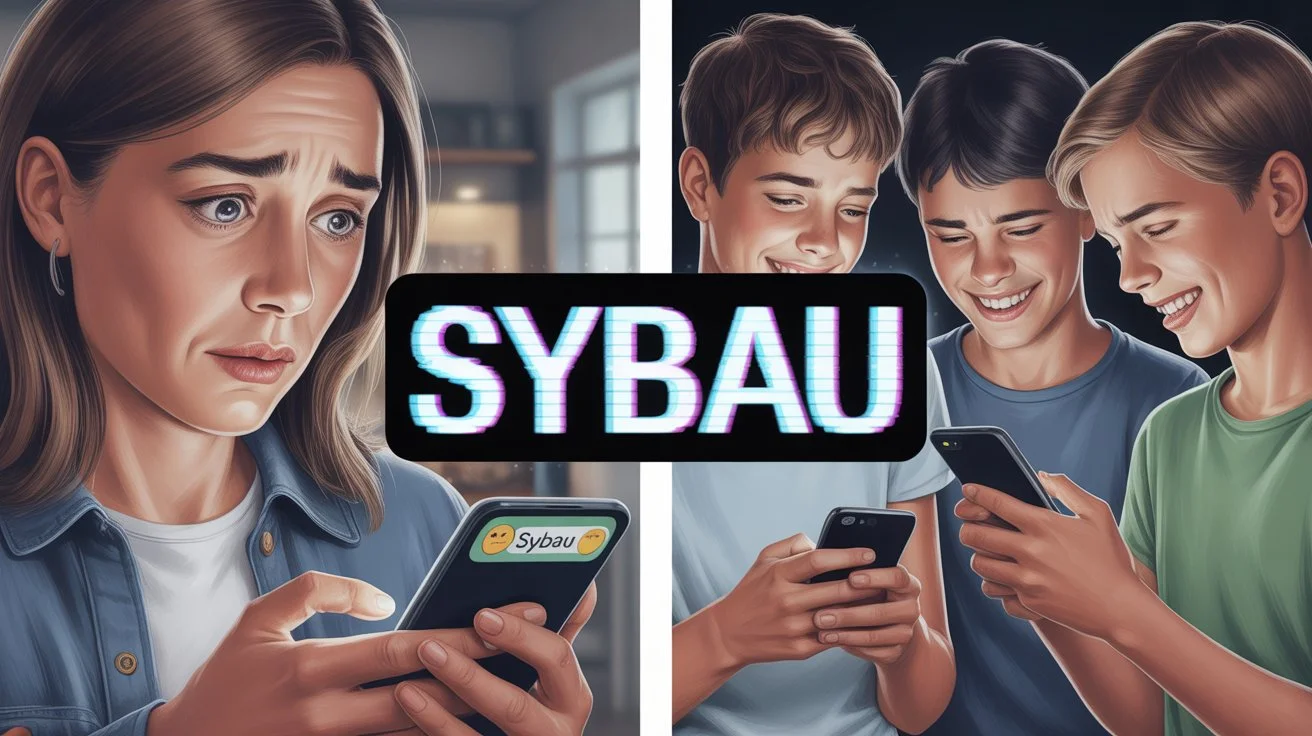
When adults ask what SYBAU means, teens don’t tell the truth. Instead, they flood comment sections with a completely made-up definition: “Stay Young, Beautiful, and Unique.”
Some say it stands for “Stay Young, Beautiful, and Unstoppable.”
One viral TikTok showed an adult asking what the acronym meant — and teens rushed in with fake answers. The most-liked comment? “Yes! Stay young, beautiful, and unique.” Another user replied, “Should we tell him?”
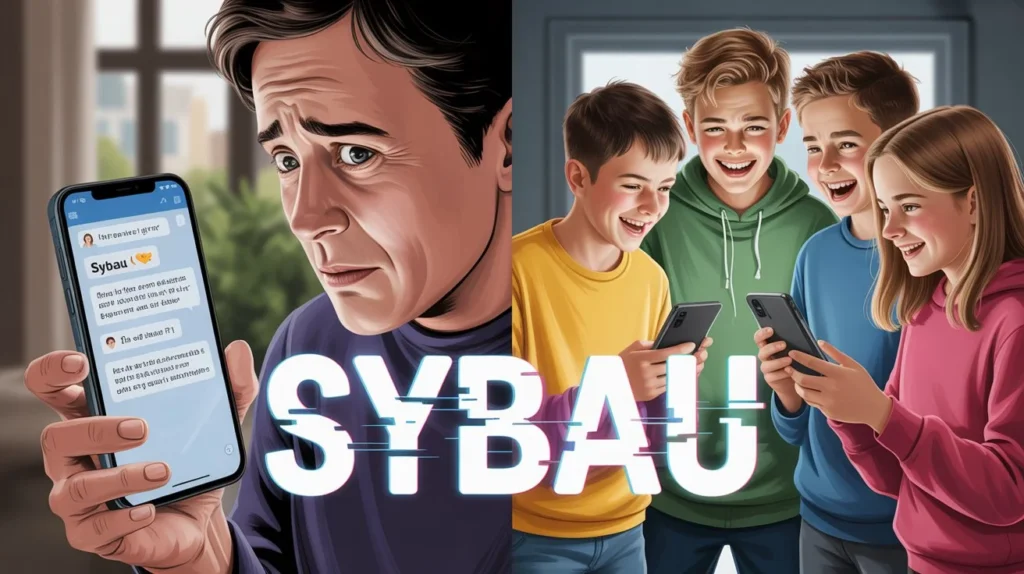
A real dad sat his teenage son down after getting confused. “I thought it meant ‘stay young, Black, and unique,'” he said. “But that doesn’t make sense when I text you ‘be safe with your friends’ and you respond with SYBAU.” The son’s face in the background said everything.
A teacher even went viral after warning parents directly: “Your child is telling you to shut your b-word a-word up. Do with it whatever you will.”
Merriam-Webster has now officially documented SYBAU in its slang section, defining it as “an angrier way to say shut up online.”
How to Pronounce SYBAU
SYBAU is pronounced in a few different ways. The most common are:
- “see-bow”
- “sigh-bow”
- “sea-brow”
There’s no single accepted pronunciation — it varies by region and social group.
Must Visit: DPMO Meaning Explained: Slang Usage, Discord & What It Really Means
SYBAU Tone at a Glance
| Context | Tone |
|---|---|
| Friends joking with 😂 emojis | Playful, harmless banter |
| Comment on a stranger’s video | Aggressive, potentially hostile |
| Texted to a parent or teacher | Disrespectful |
| Gaming chat after a loss | Frustration, trash talk |
| With 🥀💔 emojis attached | Cold, dramatic dismissal |
Where Did SYBAU Come From?
Most blogs barely touch the real history. Here’s the full picture.
SYBAU’s 2003 Urban Dictionary Origin
SYBAU is not new. It first appeared on Urban Dictionary in 2003 — back in the AIM and MySpace era, when short acronyms ruled online messaging.
It stayed niche for over two decades. Living quietly in gaming forums, early internet chat rooms, and regional online slang pockets. Most people had never heard of it.
Then 2024 happened.
How TikTok Brought It Back in 2024–2025
The TikTok brainrot era changed everything. Short, punchy, chaotic acronyms exploded on the platform — partly because they’re fast to type, and partly because they bypass content moderation filters that flag full profanity.
SYBAU fit perfectly. It’s aggressive but undetectable to automated systems. It shuts down arguments in one word. And it keeps adults completely in the dark.
A meme accelerated its spread even further. A photo of rapper Lazer Dim 700 — hands raised, expression unimpressed — became the visual equivalent of the acronym. That image paired with “SYBAU” became a widespread reaction meme across TikTok and X (Twitter).
By 2025, SYBAU had jumped from comment sections into schools, family group chats, and text messages — making it the most searched text abbreviation in the United States, ahead of FAFO, SMH, and PMO, according to data from Ahrefs and Google Trends.
How SYBAU Is Actually Used — Platform by Platform
This is what most competitors miss entirely. SYBAU doesn’t behave the same way everywhere. The platform shapes the tone, the intent, and the reaction.
SYBAU on TikTok
TikTok is ground zero for SYBAU culture.
It shows up in comment sections under hot-takes, unpopular opinions, and “this person is talking too much” videos. Creators use it in captions to add sass — “SYBAU, I said what I said 💅”
One adult went viral after ranting about receiving a SYBAU comment under his video: “And I liked your comment — so that’s why I’m kinda pissed about it.” He had no idea what he’d endorsed.
The term has generated over 1.6 million views across SYBAU misdefinition videos alone, according to tracking data from the platform.
SYBAU on Discord and Gaming Chats
Inside Discord servers and gaming lobbies, SYBAU lives in fast, emotionally charged conversations.
After a bad loss. During trash talk. When someone breaks server rules and gets called out.
It’s sharper here than anywhere else — because gaming culture already runs hot. SYBAU in a Discord argument is rarely a joke.
SYBAU on X (Twitter) and Snapchat
On X (formerly Twitter), it appears in short, sarcastic replies — especially in pop culture discourse. Love Island USA drama. Celebrity takes. Anything with a passionate fanbase.
“All these love island spoilers tonight, SYBAU plzzzz” — a real post that captured exactly how the term functions: sharp, funny, culturally fluent.
On Snapchat, it lands in private group chats when a joke goes too far or someone won’t drop a topic.
SYBAU in Real Life — Schools and Family Homes
SYBAU has moved off-screen. It’s now said out loud in schools, texted between siblings, and — most confusingly — sent to parents who believe it’s a compliment.
That’s the part that makes it uniquely modern. It works as both an insult and a plausible deniability tool in the same breath.
The 🥀💔 Emoji Combination — What No Competitor Explained
Here’s something almost no other blog covered.
When SYBAU appears with 🥀 (wilting rose) and 💔 (broken heart), it’s not just dismissal — it’s dramatic dismissal. The emojis signal: “You’re not even worth my full emotion. You’re already dead to me.”
This combo became its own micro-trend within the larger SYBAU wave. The emojis amplify the cold-shoulder energy into something more theatrical and final.
Why Kids Are Really Saying SYBAU — The Psychology Competitors Ignored
This is the section most blogs completely skip. And it’s the most important one.
It’s Not Just a Word — It’s a Power Move
Dr. Adolph “Doc” Brown, a psychologist and professor who appeared on ABC’s The Parent Test, put it directly: “Most parents are unfamiliar with the rise and fall of these terms.”
But SYBAU isn’t just unfamiliarity. It’s intentional coded language — designed to create an inside joke that excludes adults on purpose.
When teens use SYBAU, they’re doing three things at once:
- Setting boundaries (even if disrespectfully)
- Asserting generational identity and independence
- Building peer belonging through shared secret language
Dr. Carrie Jackson, a PhD child psychologist, confirmed that the false meaning strategy is a coordinated social behavior: “Many kids and teens are lying about what the acronym means and are saying that it actually stands for ‘Stay Young, Beautiful, and Unique.'”
The Deliberate Deception Culture
What makes SYBAU stand out from typical teen slang is the active misdirection.
Most slang is just incomprehensible to older generations. SYBAU goes further — teens don’t just use it, they actively defend the lie. They coordinate in comment sections. They protect the fake meaning. They laugh together when an adult believes it.
It reflects a broader digital communication shift — where coded language is a tool of generational power, not just casual expression.
As Park Magazine’s analysis noted, when teens tell adults that SYBAU means “stay young, beautiful, and unique,” they’re creating boundaries and testing limits in ways previous generations never could.
Every generation had its version of this. “Talk to the hand” in the 90s. STFU in the early 2010s. Now SYBAU in the mid-2020s.
The difference is the internet amplifies and coordinates it at a scale that was never possible before.
11 Better Alternatives to SYBAU
SYBAU gets the point across — but it can get you banned, blocked, or in real trouble in the wrong room.
Here are 11 alternatives that carry similar energy without the same risk.
Casual and Playful — Use With Close Friends
| Alternative | What It Means | Best For |
|---|---|---|
| STFU | Shut the f**k up | Casual online banter with friends |
| “Zip it 🤐” | Stop talking | Light, funny dismissal |
| “Hard pass 💅” | Total rejection | Friend group chats |
| “Not today 🙅” | I’m done with this | TikTok/Twitter replies |
Firm But Not Vulgar — When You Want to Set a Tone
| Alternative | What It Means | Best For |
|---|---|---|
| “I’m done engaging” | Exiting drama cleanly | Mature online spaces |
| “That’s a no from me” | Clear refusal | Discord or gaming chats |
| “Moving on 🚶” | Dropping the topic entirely | Group chat arguments |
| NGL + silence | “Not gonna lie” — then nothing | Passive, cold dismissal |
Context-Smart Swaps — When the Room Matters
| Alternative | What It Means | Best For |
|---|---|---|
| “Respectfully, no.” | Polite but immovable | Semi-professional spaces |
| “Noted 🙄” | Sarcastic acknowledgment | Social media comments |
| The block button 🚫 | Ultimate, wordless dismissal | Strangers, trolls, bad-faith replies |
The golden rule: Know your audience. What reads as playful in a private friend group can escalate fast with strangers or in moderated spaces. SYBAU with emojis softens it slightly — SYBAU alone hits harder.
FAQs
What does SYBAU 💔 🥀 mean?
When SYBAU appears with 💔 and 🥀, it’s a dramatic cold-shoulder combo. The emojis signal total emotional detachment — “you’re not even worth a real response.” It’s dismissal with theatrical flair, and it became its own micro-trend within the broader SYBAU slang culture.
What does SYBAU mean in slang text?
In slang text, SYBAU means “Shut Your B*tch A** Up.” It’s a blunt, dismissive reply used in online chats, comment sections, and DMs — mainly by Gen Z users. Despite the vulgar meaning, it’s often used humorously between close friends.
What does SYBU mean in texting?
SYBU is a shortened or mistyped variant of SYBAU. It’s missing the “A” but carries the exact same meaning and energy. You’ll see it used interchangeably in fast-paced chats where even five letters feels like too many.
Why are kids saying SYBAU?
Kids use SYBAU because it’s a generational inside joke — they know adults believe the innocent decoy meaning (“Stay Young, Beautiful, and Unique”). It creates peer belonging, asserts independence, and bypasses content filters. It’s also genuinely funny to those in on the joke, according to child psychologists Dr. Carrie Jackson and Dr. Adolph Brown.
Is it rude to say SYBAU?
Yes — it is vulgar and can be disrespectful depending on context. Between close friends who roast each other, it may land as banter. Directed at strangers, parents, or authority figures, it crosses into hostility. Merriam-Webster classifies it as aggressive online dismissal. Platform matters, relationship matters, and tone matters.
What new slang is Gen Z using?
Beyond SYBAU, the most-searched Gen Z slang terms in the US right now include WYLL (what you look like), PMO (pisses me off / put me on), FAFO (f**k around and find out), NGL (not gonna lie), ISTG (I swear to God), ATP (at this point), ASL (as hell), and NFS (new friends). These terms change fast — what’s trending today may be “unc behavior” by next month.
Conclusion
SYBAU is more than a viral acronym. It’s a window into how Gen Z communicates online — fast, coded, layered with meaning, and deliberately designed to keep adults guessing.
It started in 2003 on Urban Dictionary, lived underground for two decades, and then TikTok’s brainrot era turned it into the most-searched slang term in America.
If you’re a parent — approach it with curiosity, not panic. If you’re a teen — know your room. The same four letters that get a laugh in a friend group can cause real damage somewhere else.
And if you just want to tell someone to stop talking without the drama? The block button still works perfectly.